 How-to
7 Signs Old Siding Is Worth Repairing (Not Replacing)
Last Updated: November 1, 2026
Quick Summary
Yes, in most cases repairing old siding is worth it when damage is limited to a few boards and the wall structure underneath is sound. Replacement makes more sense when problems are widespread or hidden moisture has taken hold. Repair is typically the smarter choice when the damage is isolated.
- Repair when damage covers less than about a third of a wall and the wall is dry.
- Replace if rot reaches the sheathing, moisture keeps recurring, or repairs have become frequent.
- Do not paint over soft wood, because paint seals moisture inside the board and rot keeps spreading.
- Confirm matching material is available before approving repairs on siding older than about 10 years.
- Ask for a line-item estimate separating siding, sheathing, flashing, and painting costs.
Table of Contents
- Signs Siding Needs to Be Replaced Instead of Repaired
- Common Causes of Siding Damage and What They Tell You
- Rotting Wood Siding Repair: When Rot Is Fixable and When It Isn't
- How Age and Material Affect Repairability and Lifespan
- Cost to Repair Siding Compared With Siding Replacement
- Siding Repair or Replacement: A Decision Framework for Your Home
- Scheduling a Siding Inspection Before You Decide
- Frequently Asked Questions
Yes, in most cases, repairing old siding is worth it. Deciding between repair and replacement usually comes down to how much of the siding is damaged and what is happening underneath it when repairing old siding is on the table. Repair is typically the smarter choice when damage is limited to a few boards and the wall structure is sound. Replacement makes more sense when problems are widespread or hidden moisture has taken hold. See the full list of replacement warning signs to check your own walls.
Below, we cover the seven signs that tell you old siding is worth saving, along with the warning signs that point toward replacement.
Quick answer: Repair old siding when damage is isolated, the underlying wall is dry and solid, and the material can still be matched. Replace it when rot, moisture, or widespread failure is present.
Signs Siding Needs to Be Replaced Instead of Repaired
Some damage is a clear signal that repair will not solve the problem. Look for siding that is soft when pressed, boards that pull away from the wall, or damage spread across most elevations of the house.
- Soft or spongy boards that give under pressure
- Warping or buckling across large areas
- Water stains or mildew behind siding on the inside wall
- Cracks or holes on more than a third of the walls
- Pieces that can no longer be matched in color or profile
A common mistake is patching a failing wall again and again. Each patch costs money, and the problem usually returns. Once repairs start to feel constant, replacement is often the better value.
Common Causes of Siding Damage and What They Tell You
Knowing what caused the damage tells you whether repair will hold. Impact damage from hail or a fallen branch is usually isolated, so repairing the affected boards often works well. Moisture damage is different. It often starts behind the siding, where a leaking gutter, poorly sealed window, or missing flashing lets water soak into the wall.
Sun and weather wear age the surface gradually. Paint fades, caulk dries out, and seams open up. These problems are generally minor and easy to fix during routine maintenance. If you see damage in several places at once, look for a shared cause such as poor drainage or ventilation problems before you decide on repairs.
Rotting Wood Siding Repair: When Rot Is Fixable and When It Isn't
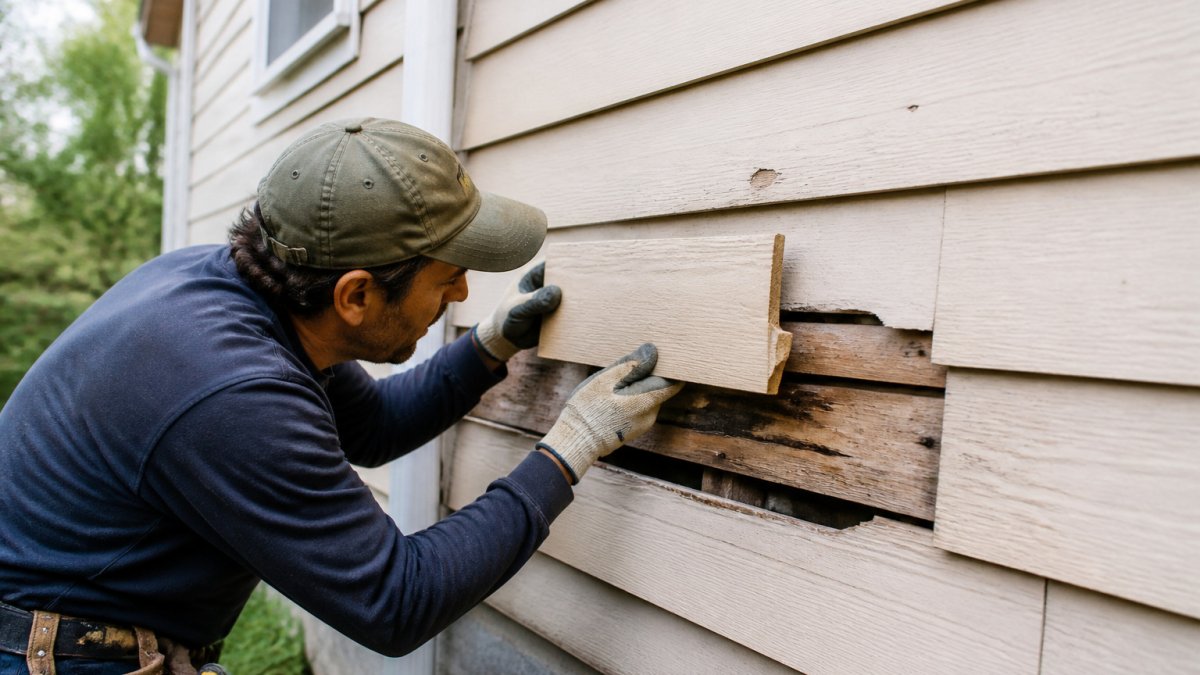
Wood siding can often be repaired when rot is caught early and limited to the surface or a single board. Soft spots that are small, dry out after the moisture source is fixed, and do not spread into the sheathing can be cut out and replaced with new wood, primed, and painted.
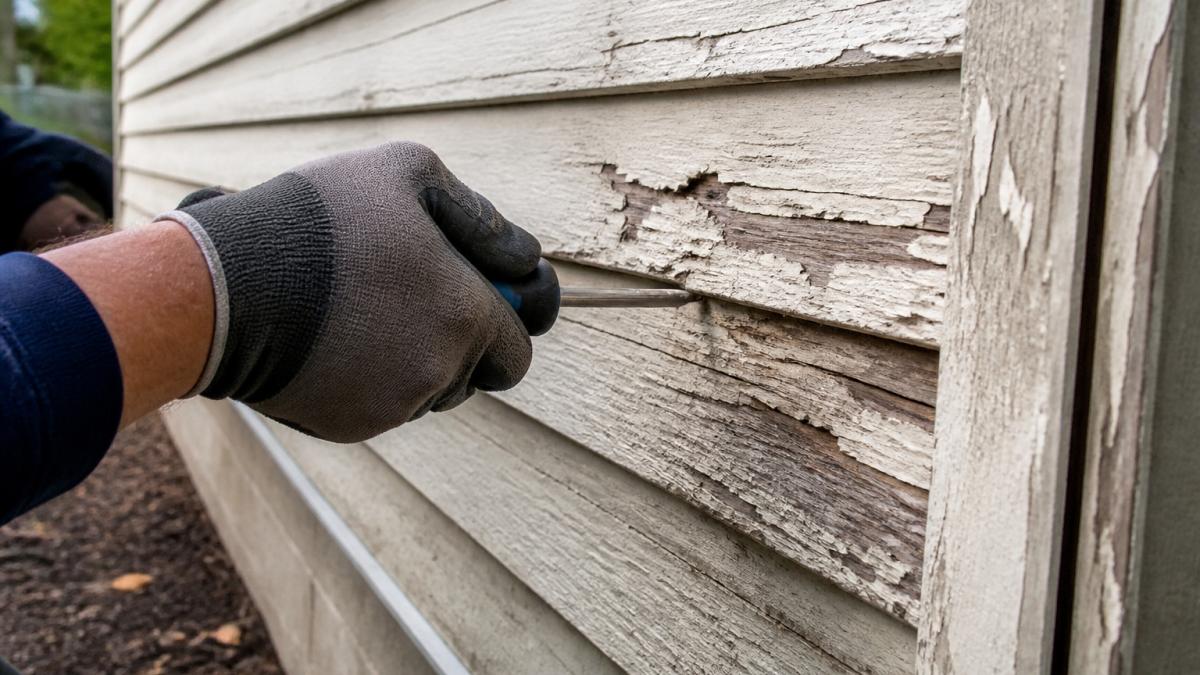
Rot becomes a replacement issue when it reaches the framing or sheathing. Push a screwdriver into the board. If it sinks in easily and the wood underneath feels spongy, the damage likely goes deeper than the siding. Fixing the source of the water is critical either way, because a repair done without stopping the moisture will fail quickly.
Watch out: Do not paint over soft wood. Paint seals moisture inside the board, and the rot will keep spreading where you cannot see it.
How Age and Material Affect Repairability and Lifespan
The material and age of your siding shape how well a repair will hold and whether matching pieces can even be found. Read practical maintenance steps that extend siding lifespan after a repair. The table below summarizes typical service life, repairability, and matching considerations across four common materials.
| Material | Typical service life | Repair-friendly? | Key failure mode | Matching difficulty |
|---|---|---|---|---|
| Wood / cedar | 20-40 years with maintenance | Yes, can be cut out, spliced, primed, and painted repeatedly | Rot at end grain, joints, and near grade; paint failure | Moderate, profile and species can usually be matched, color needs painting |
| Vinyl | 20-30 years | Yes for isolated panels, but brittle with age | Cracking, fading, buckling; brittle in cold | Hard on older homes, color lots and profiles are discontinued |
| Fiber cement | 30-50 years | Yes, but cutting and fastening must be done correctly | Cracking at fasteners, chipping, paint failure | Moderate, profiles are standard, but factory finish colors fade and lot-match |
| Aluminum / steel | 30-40 years | Limited, dents and corrosion are hard to blend | Dents, chalking, corrosion at fasteners | Hard, profiles and finishes often discontinued |
Wood siding, including cedar, is the most repairable of the common materials. It can be cut out, spliced with new stock, primed, and painted, and it accepts refinishing many times over its life. That makes it a strong candidate for spot repair on older homes, provided the rot has not reached the sheathing or framing. The catch is maintenance: wood needs paint or stain every several years, and a repair that is not back-primed and painted will fail faster than the surrounding wall.
Vinyl is easy to replace in sections when the panels are still flexible, but it becomes brittle as it ages. On a 20-year-old vinyl wall, a repair may crack adjacent panels during removal, and finding an exact color and profile match is often impossible because manufacturers discontinue lines and color lots shift. In that situation, a repair can leave a visible patch that hurts curb appeal even though it stops the leak.
Fiber cement holds up well and is repairable, but it cracks if it is cut or fastened incorrectly, and the factory finish is difficult to match on older installations. Repairs usually need to be painted to blend, which means the repaired area may not match the weathered finish on the rest of the wall.
Metal siding can be patched, but dents and corrosion are hard to blend, and matching older profiles and finishes is often impractical. Repair is usually reserved for small, out-of-sight areas.
Age matters as much as material. A wall that has already been repaired several times may be near the end of its service life even if each individual repair looks fine. If the material is within a few years of the low end of its expected lifespan, a repair buys time but may not deliver lasting value. The practical test is to compare the cost of the repair against the years of service it is likely to add, and to ask whether the same money would be better applied to a partial or full replacement.
Cost to Repair Siding Compared With Siding Replacement
Repair is almost always the lower-cost option for isolated damage, but the size of that gap depends on three variables: how much siding is affected, what the material is, and whether hidden damage is found once the boards come off. The table below shows general planning ranges, not a quote for your home. Compare roofing and siding repair pricing side by side before you request an estimate. Treat them as a budgeting tool, then get a written estimate for your specific walls.
| Scope of work | Typical range (USD) | What drives the number |
|---|---|---|
| Spot repair (a few boards or one small area) | $150-$600 | Number of boards, material match, height/access |
| One-wall repair (partial elevation) | $600-$2,500 | Wall square footage, sheathing condition, trim |
| Whole-home replacement (vinyl) | $8,000-$20,000 | Home size, removal, disposal, trim, insulation |
| Whole-home replacement (fiber cement) | $15,000-$35,000 | Material cost, cutting/fastening labor, painting |
| Whole-home replacement (wood/cedar) | $14,000-$40,000+ | Species, finish, detailing, historic constraints |
Actual pricing depends on the size and condition of your home and the scope of work. For current pricing or a quote, contact Real Property Industries, LLC through its website.
The repair-versus-replace decision is not just the invoice in front of you. Compare the cost of the repair against the remaining service life it buys, and ask your contractor to state the expected service life of the repair in writing so you can make that comparison.
Hidden damage is the wildcard. Once boards are removed, a contractor may find soft sheathing, a rotted sill, or a failed flashing detail that was not visible from outside. Ask any contractor how sheathing replacement and change orders will be handled before work begins, so you are not surprised mid-job.
Best for: Homeowners with localized damage and a dry, solid wall. Skip if: Your walls show soft wood, persistent moisture, or damage across most elevations.
Siding Repair or Replacement: A Decision Framework for Your Home
Use this simple framework to decide:
- Repair if damage covers less than about a third of a wall, the wall is dry, and matching materials are available.
- Replace if rot reaches the sheathing, moisture is recurring, or repairs have become frequent.
- Investigate first if you are unsure. Hidden damage is easier to find before you commit to either option.
This approach keeps your budget focused on problems that actually need fixing. It also protects your home's value, since a well-maintained exterior is easier to sell and rent.
Scheduling a Siding Inspection Before You Decide
A professional inspection is the best way to tell repair from replacement. A professional inspection can check for hidden moisture, soft framing, and failing flashing that you may miss from the ground. Find local siding installation experts to contact for an inspection. Real Property Industries, LLC is a licensed and insured contracting company serving the greater Charleston and Huntington area.
Before you hire anyone, confirm that the contractor is licensed and insured, and ask how they handle warranty work after the job is done. Learn how to find a reliable exterior contractor before booking. If you have a roof and siding issue at the same time, a single inspection can save time and help you plan both repairs. Contact Real Property Industries, LLC through its website to schedule an inspection.
Frequently Asked Questions
Does siding replacement increase home value?
Siding replacement can improve curb appeal and help a home show well, but the return depends on the material, local market, and condition of the rest of the house. Replacing siding that is failing usually protects value better than leaving it in place, because buyers and appraisers often note visible damage and moisture problems. Ask a local appraiser or real estate agent how comparable homes with updated exteriors have sold in your area before assuming a specific payback.
Is it worth repairing rotting wood siding?
Small areas of rot in wood siding are often worth repairing if the rot has not spread into the sheathing or framing and the source of moisture has been corrected. Replace the damaged boards, seal the joints, and repaint the repaired area. If rot is widespread, soft when probed, or paired with damaged wall structure, repair may only delay a larger project, and replacing the affected sections or the full wall is usually the more reliable choice.
How much damage can be repaired before siding should be replaced?
A useful rule is that isolated damage covering a small share of a wall can usually be repaired, while damage spread across several walls, repeated patching in the same areas, or hidden moisture behind the siding points toward replacement. Patching one cracked panel is different from patching twenty. Have a contractor inspect for underlying moisture before deciding, since visible damage often understates the problem.