 Comparison
Roofing and Siding Repair Cost Comparison
Table of Contents
- Roofing and Siding Repair Cost Comparison at a Glance
- Understanding Roof Repair Cost
- Understanding Siding Repair Cost
- Repair Versus Replacement: Which Makes Financial Sense
- Roof and Siding Inspection Checklist
- Roof Repair Estimate Checklist
- Coordinating Roof and Siding Projects
- Conclusion
- Frequently Asked Questions
Last Updated: October 20, 2026
Roofing and Siding Repair Cost Comparison at a Glance
When your roof leaks or siding cracks, the first question is usually "how much will this cost?" Understanding the roofing and siding repair cost comparison helps you make smarter decisions about your home's exterior. Real Property Industries, LLC has worked with homeowners across the region for over seven years, and we've seen how repair costs stack up against replacement and how coordinating both projects changes the financial picture.
Material type, home size, damage severity, and repair versus replacement all factor into what you'll pay. This guide breaks down the numbers so you can compare options without guessing.
Understanding Roof Repair Cost
A roof repair cost depends on three compounding variables: scope of damage, roofing material, and accessibility. Breaking pricing into the scopes homeowners actually face shows how material and access shift the number.
Repair scopes and typical ranges. The following ranges reflect common residential work in the contiguous U.S. and assume a single-story or low-slope-accessible roof; they are planning ranges, not quotes, and vary by market, season, and contractor.
| Repair scope | Typical range | What drives the price |
|---|---|---|
| Single shingle or panel replacement | $150-$400 | Minimum service call, matching material, one-trip labor |
| Flashing repair (chimney, vent, valley) | $300-$800 | Access, sealant vs. replacement flashing, ice-dam detailing |
| Small leak / localized patch | $400-$1,200 | Leak diagnosis time, underlayment repair, interior protection |
| Section re-roof (one slope or 100-300 sq ft) | $1,000-$3,500 | Tear-off, decking inspection, material match |
| Storm damage repair (wind/hail, multiple areas) | $1,500-$6,000+ | Number of affected slopes, code upgrades, disposal |
| Structural repair (decking, rafters, fascia) | $2,000-$10,000+ | Extent of rot, engineering, permit and inspection |
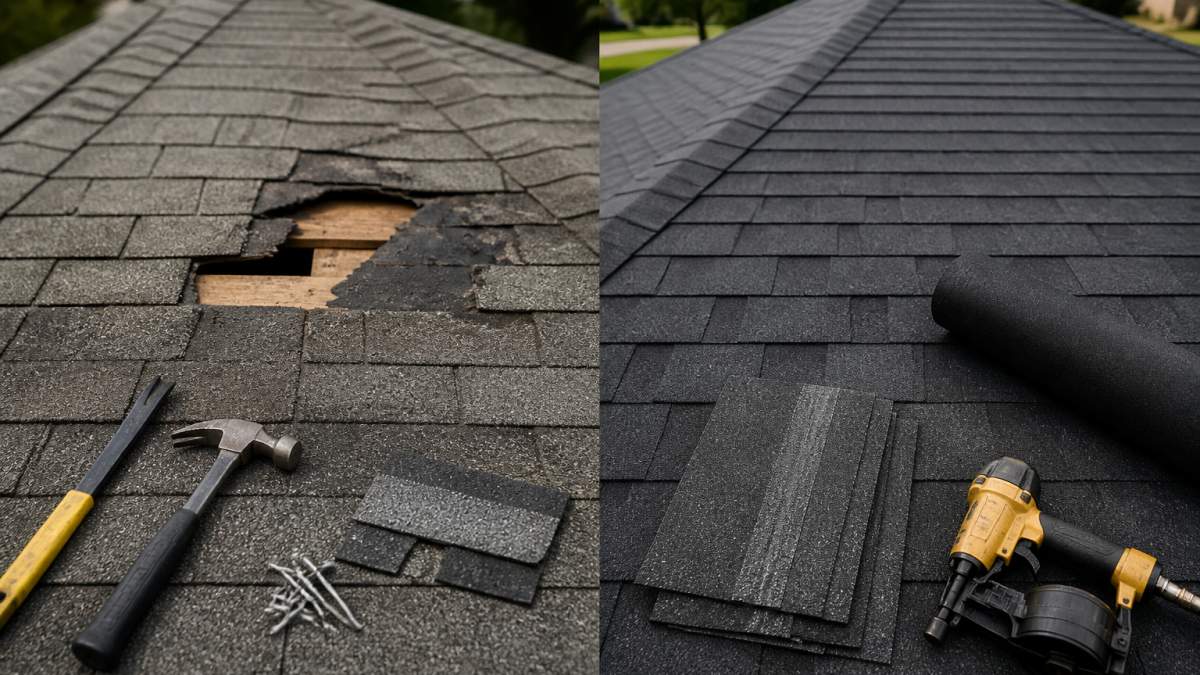
How material changes the repair price. Asphalt shingles are cheapest to repair because material is commodity-priced and most crews carry matching stock. Metal repairs cost more because panels are cut to length and fasteners and sealants are specialized.
How home size and access change labor. Labor is the largest line item in most repairs. A simple 1,500-square-foot gable roof lets a crew stage quickly; a 3,500-square-foot home with multiple valleys, dormers, and steep pitches takes longer to navigate, inspect, and protect.
The repair-stacking trap. A series of $300-$500 repairs over three years totals $1,500-$2,000, approaching the cost of a partial re-roof.
Understanding Siding Repair Cost
Siding repair cost follows similar logic with different material variables. Vinyl is inexpensive to repair, a few damaged panels can be replaced without touching the rest of the wall. Fiber cement and wood cost more per panel but offer better durability and curb appeal. Metal sits in between.
Siding repair cost also depends on whether damage is localized or widespread. A single cracked panel is straightforward. Multiple panels with water infiltration, rot, or pest damage signal a larger problem requiring removal and replacement of sections underneath the visible surface, that's when costs climb.
Location matters too. Siding facing prevailing winds or afternoon sun weathers faster, and damage near ground level sometimes indicates drainage or foundation issues that must be addressed alongside the fix.
Siding damage is usually visible, though a contractor can spot hidden rot behind panels, compromised flashing, or moisture intrusion that affects the repair approach and total cost.
Repair Versus Replacement: Which Makes Financial Sense
Most guides frame this as a binary: repair or replace. In practice there are three options, repair, partial replacement, and full replacement, and the right answer depends on damage extent, material age, matching availability, and remaining service life.
The three-option framework.
- Repair, best when damage is isolated (one slope, a few panels), the system is young relative to its expected life, matching material is available, and you plan to stay fewer than five years.
- Partial replacement, best when damage is confined to one elevation of siding or one or two roof slopes, the rest of the system has meaningful life left, and matching material can be sourced. This is the option competitors most often skip, yet it is frequently the best value.
- Full replacement, best when damage is widespread or recurring, the system is near end of life, matching material is discontinued, or you plan to stay long-term and want to bundle curb-appeal or efficiency upgrades.
Decision tree by damage extent.
- Damage on one slope or one wall elevation, under roughly 20% of the total area → repair first.
- Damage on two slopes or two elevations, or 20-40% of area → get a partial-replacement quote alongside the repair quote.
- Damage across three or more slopes or elevations, or over 40% of area → full replacement is usually the better value once labor and access are counted.
- Recurring leaks in the same area after two repairs → stop repairing; the underlying cause (flashing, decking, ventilation) needs replacement-level work.
Decision tree by material age and remaining life. Typical service life: asphalt shingles 20-25 years, metal roofing 40-70, tile and slate 50-100, vinyl siding 20-40, fiber cement 30-50, wood siding 20-40.
Matching availability is the hidden variable. Siding profiles and shingle lines get discontinued. If your material is no longer manufactured, a small repair can force a partial replacement of an entire elevation to avoid a visible mismatch.
Normalized scenarios. To compare apples to apples, assume a 2,000-square-foot single-story home with a 6:12 gable roof and vinyl siding, moderate damage:
| Scenario | Roof option | Siding option | Combined planning range |
|---|---|---|---|
| Isolated damage (one slope / one elevation) | Repair $400-$1,200 | Repair $300-$900 | $700-$2,100 |
| Moderate damage (two slopes / two elevations) | Partial re-roof $2,500-$6,000 | Partial re-side $2,000-$5,000 | $4,500-$11,000 |
| Widespread damage or end-of-life | Full replacement $9,000-$18,000 | Full replacement $8,000-$16,000 | $17,000-$34,000 |
These are planning ranges, not quotes; local labor rates, pitch, access, and material choice move them.
The 30% rule, refined. Track repair spending over a rolling three-year window. If cumulative repairs exceed roughly 30% of a replacement estimate, replacement usually wins financially.
Roof and siding lifespans do not match. Your shingles may need replacement while your vinyl siding has a decade left, or vice versa.
Roof and Siding Inspection Checklist
Before you get repair estimates, inspect both systems yourself. You won't catch everything, but you'll know what questions to ask a contractor.
For your roof:
- Check for missing, cracked, or curled shingles
- Look for granule loss (bare spots where the protective coating has worn away)
- Inspect flashing around chimneys, vents, and valleys
- Check for moss or algae growth (common in damp climates)
- Look for sagging or dips in the roofline from inside the attic if possible
- Note any visible water stains on interior ceilings or walls
For your siding:
- Look for cracks, splits, or warping in panels
- Check for soft spots or rot, especially near the base
- Inspect caulking and seals around windows and doors
- Look for gaps between panels or where siding meets trim
- Check for peeling paint or discoloration (may indicate moisture)
- Look for holes, dents, or impact damage
Document what you find with photos and notes, specific information helps contractors give more accurate estimates.
Roof Repair Estimate Checklist
When you request a roof repair estimate, here's what to ask for and what to watch:
| Estimate Component | What to Look For |
|---|---|
| Specific damage identified | Contractor names exact problem areas, not vague descriptions |
| Material type and cost | Breakdown of shingles, flashing, or other materials needed |
| Labor hours and rate | Clear labor cost, not a lump sum with no detail |
| Warranty or guarantee | Written coverage for the repair, typically 1-5 years |
| Timeline | When work starts and expected completion date |
| Cleanup and disposal | Whether old materials are removed and debris cleared |
| Permits or inspections | Whether permits are required and who handles them |
If a contractor gives you a one-line quote with no breakdown, ask for more detail, you're being smart, not difficult.
Get at least two estimates. Real Property Industries, LLC always recommends this because pricing varies with contractor experience, local material costs, and how each assesses scope. Two estimates help you spot outliers and understand the typical market rate.
Coordinating Roof and Siding Projects
If you need both roof and siding work, the timing and sequencing matter. Coordinating both projects can actually save money and reduce disruption.
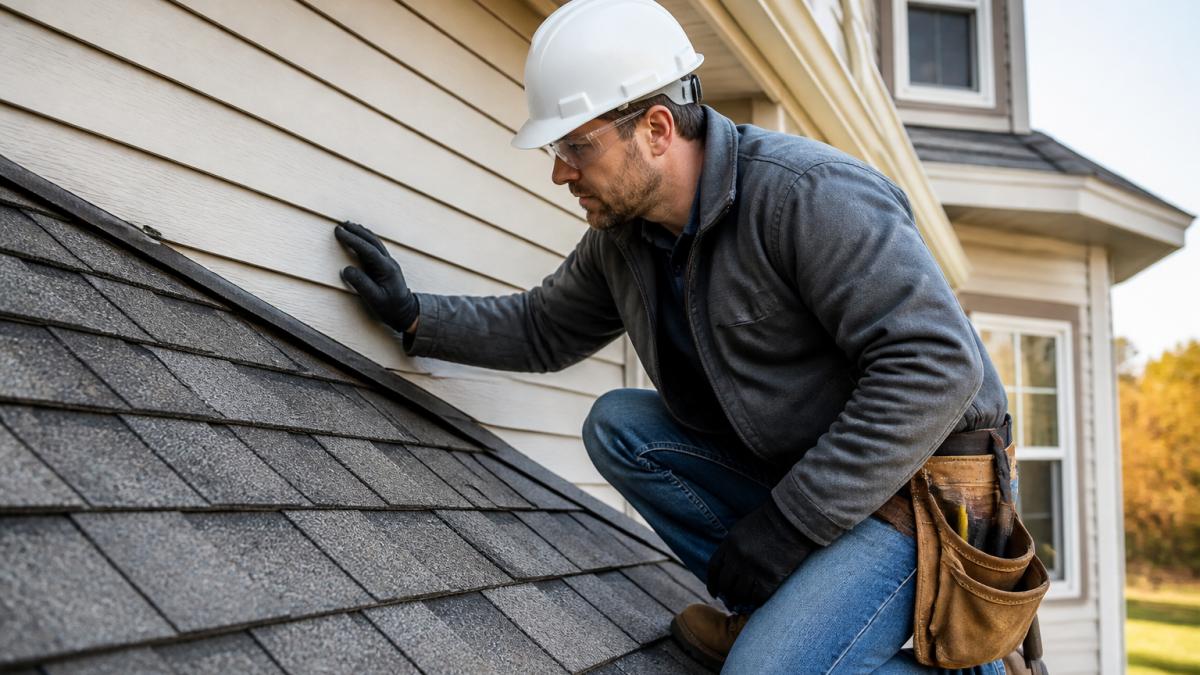
Do roof work first. Water flows down. If you replace siding and then discover roof problems later, water can damage your new siding before the roof is fixed.
Coordinate the contractor schedule. If the same company handles both (as Real Property Industries, LLC does), you can schedule back-to-back work, reducing setup time and disruption. One crew, one equipment setup, one cleanup.
Material matching is easier when planned together. A single contractor can ensure siding colors and styles coordinate with roof work, which matters for curb appeal and resale value.
Insurance claims may cover both. If storm damage caused both roof and siding problems, your insurance adjuster sees the full scope of damage at once.
Labor efficiencies add up. Contractors working on adjacent areas can share equipment, staging areas, and sometimes labor, which sometimes translates to modest cost savings worth asking about when you get estimates.
Tell your contractor upfront you're considering both projects; a professional will help you sequence the work logically and identify cost advantages to doing them together.
Conclusion
Deciding between roof repair and siding repair, or whether to replace instead, comes down to your specific damage, your home's age, and your timeline. Real Property Industries, LLC has helped homeowners make these decisions for over seven years with honest assessments and clear estimates. Whether you're facing isolated damage or a larger exterior refresh, we recommend a professional inspection, detailed estimates, and coordinated planning when both systems need attention. Contact us for a consultation and let's figure out the right approach for your home.
Frequently Asked Questions
How much does roof repair typically cost?
Roof repair costs depend on damage severity, material type, and project size. Minor repairs like patching a few shingles range from $150 to $500, while more extensive work addressing leaks or structural damage typically costs $1,000 to $3,500. Labor makes up a significant portion of the estimate. Get a contractor quote for your specific situation, as roofing material, roof size, and local labor rates all affect the final price.
How much does siding repair typically cost?
Siding repair costs vary by material and damage extent. Vinyl siding repairs run $200 to $1,000 for localized damage, while fiber cement or wood siding repairs often cost $500 to $2,000 due to material matching and installation complexity. Full-section replacements cost more. The final price depends on how many panels need work, material availability, and labor rates in your area. Request quotes from licensed contractors for accurate pricing.
Is it cheaper to repair a roof or siding?
Roof repairs are generally cheaper than siding repairs for isolated damage, but both depend on scope and materials. A small roof patch costs less than replacing a section of siding. However, if either system has widespread damage, replacement may offer better long-term value than repeated repairs. Compare the cost of ongoing maintenance against a one-time replacement investment over 10-15 years to decide which approach saves money.
Can roof and siding repairs be done at the same time?
Yes, combining roof and siding projects can save money on labor, equipment setup, and scheduling. Contractors can coordinate the work to minimize disruption and may offer package pricing. Bundling also reduces the number of times crews need to access your home and set up safety equipment. Discuss project timing and potential savings when requesting estimates from licensed contractors who handle both services.
What factors affect roofing and siding repair costs the most?
The biggest cost drivers are project size (square footage), damage severity, material type, and labor rates. Roof repairs on a larger home cost more than repairs on a smaller one. Storm damage or structural issues increase complexity and price. Material availability affects cost: matching rare siding or specialty roofing materials costs more. Labor is typically 40-60% of the total estimate, so local contractor rates matter significantly.