
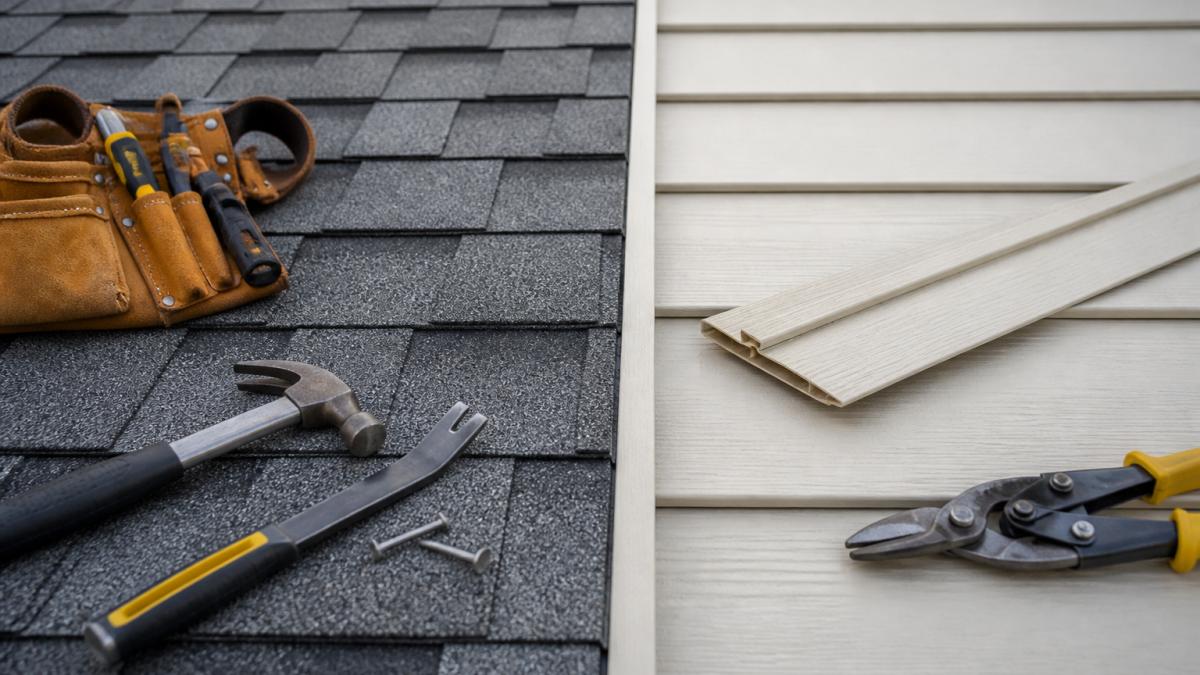
 comparison
Roofing and Siding Repair Together: Benefits & Process
Table of Contents
- Why Combine Roofing and Siding Repair
- Signs of Roof and Siding Damage
- Structural Interdependency: How Roof and Siding Work Together
- Cost of Roof and Siding Replacement: Bundling Savings
- Material Compatibility Guide
- Exterior Home Renovation Timeline for Combined Projects
- Professional Inspection and DIY Assessment
- Why Hire a Licensed Contractor for Roofing and Siding Repair
- Frequently Asked Questions
Last Updated: September 30, 2026
Why Combine Roofing and Siding Repair
Roofing and siding repair together addresses two interconnected systems that protect your home's structure. When you repair them separately, you miss the opportunity to fix the vulnerabilities where they meet. The roof-to-wall joint is where most water intrusion problems start, and patching one system without addressing the other leaves your home exposed.
Think of your roof and siding as a unified weather barrier. Water doesn't care about the boundary between them. When rain hits your roofline, it flows down the fascia board and along the siding. If either system has gaps, cracks, or deterioration, moisture penetrates deeper into your home's structure. Addressing both systems at once means fixing the flashing, fascia, and j-moulding that connect them, plus the siding panels and shingles that protect them.
The real advantage goes beyond stopping leaks. When contractors handle roofing and siding repair together, they coordinate materials, timing, and workmanship. You avoid the scenario where a new roof sits on old, damaged siding, or fresh siding meets a failing roof. Coordinated work also reduces the total disruption to your property and your schedule.
Signs of Roof and Siding Damage
Your home sends clear signals when the roof or siding needs attention. Visible damage is the most obvious sign, but the less obvious warning signs often cause the most structural damage. Learning to spot these early prevents expensive repairs down the line.
Water Intrusion and Structural Risk
Water intrusion is the most dangerous outcome of roof and siding failure. You might not see it happening. Water can travel behind siding, into wall cavities, and down into framing for months before visible damage appears. By then, rot has compromised structural integrity and mold has spread.
Common signs of water intrusion include soft spots in exterior walls, discoloration on interior ceilings or walls, peeling paint on siding, and dark stains on fascia boards. If you press on siding and it feels spongy, water has likely compromised the substrate. Interior signs like musty odors, visible mold, or warped drywall indicate the problem has progressed significantly.
The structural risk escalates quickly. Rotted framing loses its load-bearing capacity. Compromised wall sheathing can't support roof weight properly. Mold spreads through insulation and into living spaces, creating health hazards. These problems don't stabilize, they accelerate. Water damage compounds over time, especially in freeze-thaw cycles where ice expands cracks and forces moisture deeper.
Structural Interdependency: How Roof and Siding Work Together
Your roof and siding form a single weather-resistant envelope. They're not independent systems, they're mechanically and functionally connected at multiple points. Understanding this interdependency explains why repairing them separately often fails.
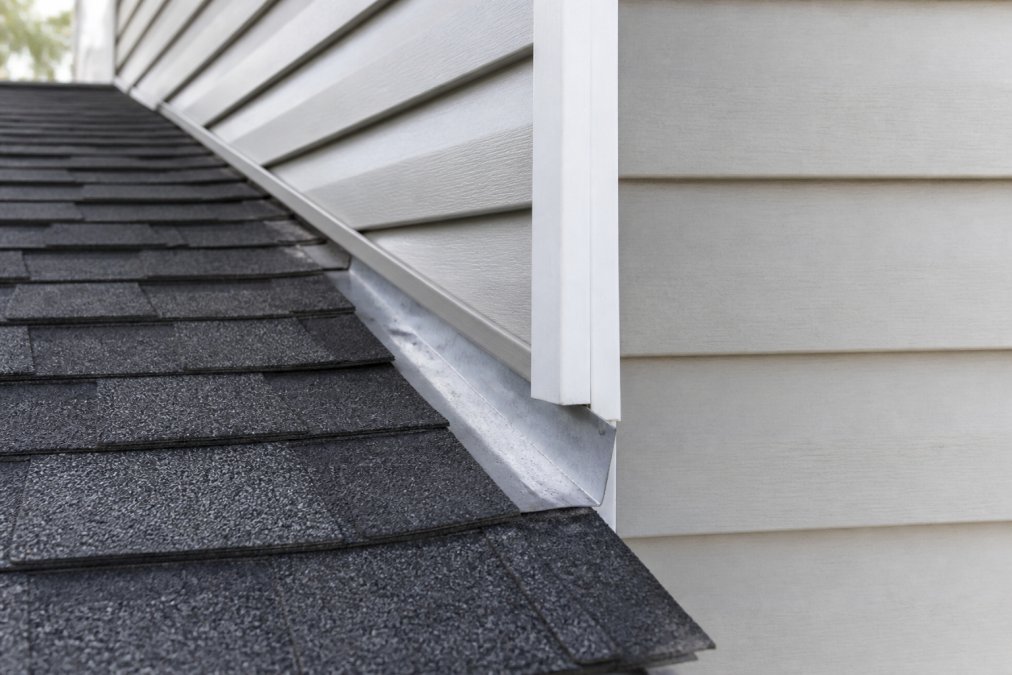
The roof transfers water down to the siding through the fascia board and the roof-to-wall joint. Siding channels water down and away from the foundation. Flashing creates watertight seals where the roof meets the wall. J-moulding guides water along the siding's edge. Butyl tape and moisture barriers seal gaps and prevent water from entering cavities behind the visible surface.
When one system fails, it forces the other to work harder. Damaged siding allows water to penetrate behind the surface, which then travels upward and into the roof structure. Failing roof shingles shed water in unpredictable directions, overwhelming the siding's ability to shed it. Deteriorated flashing creates gaps that neither the roof nor the siding can seal alone.
Flashing, Fascia, and Moisture Barriers
Flashing is the metal component that bridges the gap between roof and wall. It directs water down and away from the joint where leaks are most likely. Damaged or improperly installed flashing allows water into the wall cavity, where it causes rot, mold, and structural failure.
The fascia board sits at the edge of your roof, where gutters attach. It's exposed to water from above and from siding below. Rotted fascia loses its structural function and can no longer support gutter weight. It also allows water to enter the roof structure directly.
Moisture barriers, typically felt, synthetic underlayment, or house wrap, sit behind siding and under roofing. They prevent bulk water from entering cavities while allowing vapor to escape. Compromised barriers fail to protect the structure underneath. J-moulding seals the edges of siding panels and directs water down the face rather than behind the panels.
When you repair roofing and siding repair together, contractors replace or seal all these components as an integrated system. New flashing is set properly under new shingles and over new siding. Fascia is replaced if damaged. Moisture barriers are continuous and properly overlapped. This coordinated approach prevents the water from finding alternate routes into your home.
Cost of Roof and Siding Replacement: Bundling Savings
The total cost of roofing and siding repair depends on the square footage of your roof and walls, the materials you choose, and the extent of damage. Pricing varies significantly by region, material quality, and complexity of the project.
When you bundle roofing and siding repair together, you realize several cost efficiencies. Contractors mobilize once instead of twice, reducing setup and travel costs. Material waste decreases because crews coordinate material ordering and installation. Labor efficiency improves because roofers and siding installers work on the same schedule instead of separately. Scaffolding and equipment rental costs are shared across both projects.
The real savings come from preventing future damage. A failing roof that's left unaddressed while you fix siding will eventually damage the new siding. Deteriorating siding left in place while you replace the roof will allow water into the new roof structure. Bundling prevents the scenario where you invest in one system only to watch it fail because the adjacent system is still compromised.
Many homeowners delay exterior repairs because they perceive the cost as prohibitive. Breaking the work into phases sounds cheaper initially but often costs more overall. Contractors typically offer better pricing for comprehensive projects. Material suppliers provide volume discounts. The project timeline is shorter, reducing the duration of disruption to your property.
Real Property Industries, LLC works with homeowners to evaluate the full scope of exterior damage and present realistic pricing for bundled repairs. Honest assessment means you understand what you're paying for and why.
Material Compatibility Guide
Matching materials between your roof and siding ensures visual cohesion and functional compatibility. Materials age differently, expand and contract at different rates, and interact with flashing and trim in different ways.
Asphalt shingles are the most common roofing material. They pair well with vinyl siding, fiber cement siding, and brick. Metal roofing works with most siding types but requires careful flashing design because metal expands significantly with temperature changes. Wood shingles or cedar shake roofing pair best with wood or fiber cement siding for aesthetic consistency.
Vinyl siding is durable and low-maintenance but has a lower melting point than some roofing materials. Dark roofing colors reflect more heat toward the siding, potentially warping vinyl if flashing isn't properly designed. Fiber cement siding is more heat-resistant and pairs well with any roofing material. Brick siding is durable and works with any roofing type, but the masonry veneer requires proper flashing and weep holes to prevent moisture accumulation.
The flashing material must be compatible with both the roof and siding. Aluminum flashing can corrode if in direct contact with certain siding materials. Galvanized steel flashing is more durable but costs more. Copper flashing is the longest-lasting option but significantly increases project cost.
When you coordinate roofing and siding repair, contractors select materials that work together functionally and aesthetically.
Exterior Home Renovation Timeline for Combined Projects
A combined roofing and siding repair project typically takes 2-4 weeks, depending on the size of your home, weather conditions, and material availability. Breaking the timeline into phases helps you understand the process and plan accordingly.
Professional Inspection and DIY Assessment
A professional inspection identifies damage you might miss and assesses whether repair or replacement is necessary. Contractors use specialized tools and experience to evaluate structural integrity, material condition, and water intrusion risk.
Why Hire a Licensed Contractor for Roofing and Siding Repair
Licensed contractors carry insurance, follow building codes, and provide warranties on their work. Unlicensed contractors may offer lower prices but expose you to significant risk. If an unlicensed contractor is injured on your property, you could be liable. If work doesn't meet code, you may face fines or be required to have the work redone by a licensed contractor.
Frequently Asked Questions
Should I replace roof and siding at the same time?
Yes, bundling roofing and siding repair together often makes sense. When these systems fail simultaneously, addressing them together reduces labor costs, minimizes disruption to your home, and ensures proper weatherproofing at the critical roof-to-wall joint. A licensed contractor can assess both systems during inspection and recommend the most cost-effective approach for your property's condition.
Can a roofer fix siding?
Some roofing contractors offer both services, but not all. Many roofers specialize exclusively in roofing work. Real Property Industries, LLC provides both roofing and siding repair as part of comprehensive exterior renovation services. When hiring, confirm the contractor is licensed and insured for both trades and has experience with integrated exterior repairs.
How does bundling exterior repairs affect labor costs?
Bundling roofing and siding repairs typically reduces overall labor costs because crews can coordinate work schedules, share equipment, and access both systems from the same setup. Rather than scheduling separate contractors and paying mobilization fees twice, a single licensed contractor handles both projects efficiently. Material discounts may also apply when ordering larger quantities.
What comes first: roof or siding repair?
In most cases, the roof should be addressed first to prevent water intrusion into the wall cavity while siding work proceeds. However, the exact sequence depends on damage severity and the contractor's assessment. A professional inspection will determine whether simultaneous work is feasible or if phasing is necessary. Real Property Industries, LLC evaluates both systems to recommend the optimal repair order.