
 blog
blog
Residential Roofing Repair Services: 2026 Guide
Table of Contents
- What Residential Roofing Repair Services Actually Cover
- Signs of Roof Damage Every Homeowner Should Recognize
- Emergency Roof Repair Cost: What Drives the Price
- Hiring a Licensed Roofing Contractor: What to Verify
- DIY vs. Professional Repair: A Risk Assessment
- Navigating Insurance Claims for Roof Damage
- Seasonal Maintenance Schedules That Extend Roof Life
- Frequently Asked Questions
Last Updated: September 20, 2026
What Residential Roofing Repair Services Actually Cover
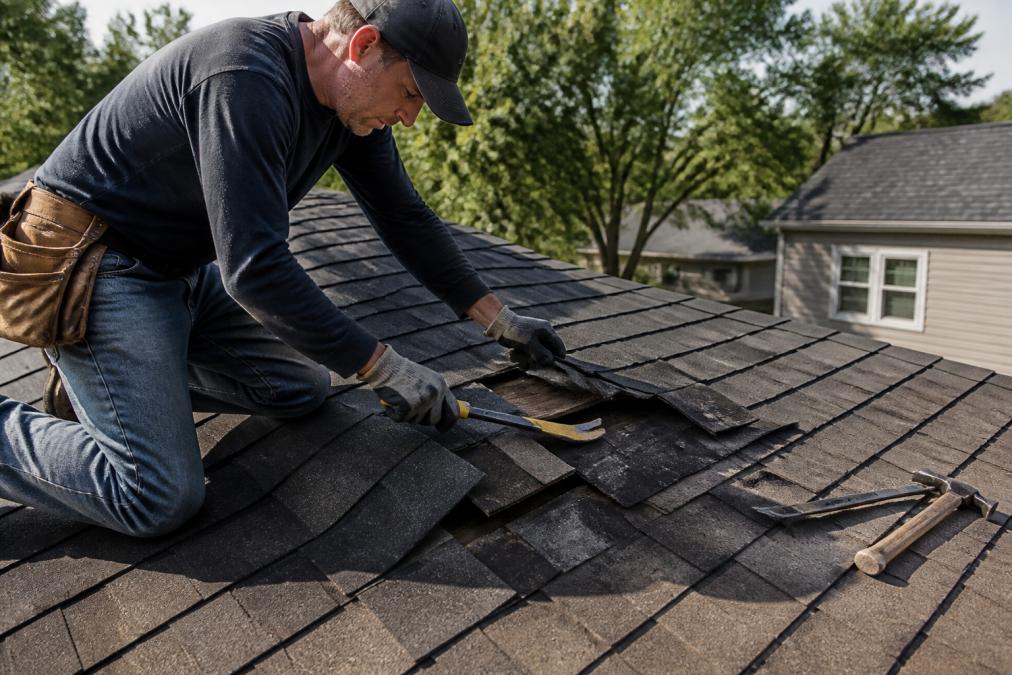
Residential roofing repair services cover the targeted fixes that restore a roof without replacing it: replacing damaged shingles, sealing flashing, patching leaks, repairing gutters, and addressing worn underlayment or decking. At Real Property Industries, LLC, we have handled exterior work in the greater Charleston/Huntington area for more than seven years, and the pattern is always the same. Homeowners wait too long, water gets in, and a small fix becomes a structural problem.
Repairs vs. Replacement: Making the Call
Repair makes sense when damage is isolated and the roof decking is sound. Replacement wins when shingles are failing across large sections, when the roof is near the end of its service life, or when repeated leaks keep returning to the same spots.
- Repair: a few damaged shingles, one flashing failure, a single leak source
- Replacement: widespread granule loss, sagging decking, or storm damage across multiple slopes
Signs of Roof Damage Every Homeowner Should Recognize
The clearest signs of roof damage are missing, cracked, or curling shingles, granules collecting in gutters, and dark stains on ceilings or walls. Catching these early is the difference between a modest repair and a full roof replacement.
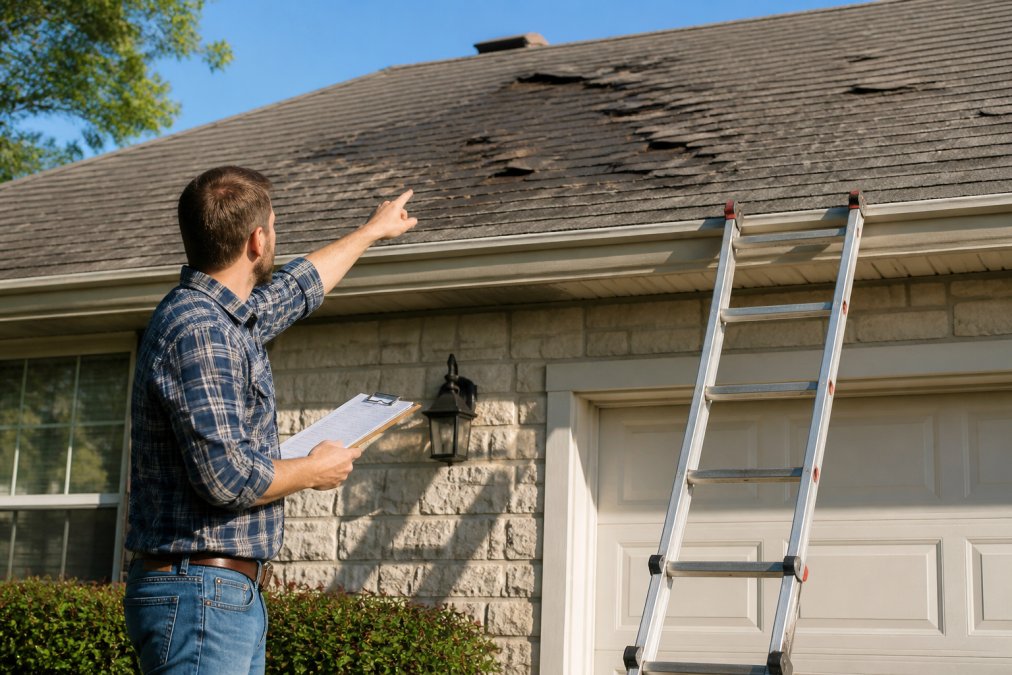
From the ground, look for:
- Shingles that are lifted, torn, or bare of granules
- Rusted or bent flashing around chimneys and vents
- Sagging spots along the roofline
- Granules piling up at downspout outlets
Interior Warning Signs
Water stains on ceilings, peeling paint near the roofline, and a musty smell in the attic all point to moisture getting past the roof. According to the Insurance Information Institute's guidance on homeowners insurance, water damage claims are among the most common and costly homeowners file, and slow leaks are a frequent cause.
Emergency Roof Repair Cost: What Drives the Price
Emergency roof repair cost depends on roof pitch, the size of the damaged area, material type, and how urgent the work is. There is no flat rate, because no two emergencies are identical, but you can still build a realistic budget by understanding how each variable moves the number.
The biggest cost drivers:
- Roof pitch: steep roofs need more safety equipment, more harness time, and slower crew movement
- Materials: asphalt shingles are simpler to match than tile or metal
- Access: multiple stories, tight lots, or landscaping in the way slow the crew down
- Extent of water damage: if roof decking is soaked, it has to be replaced
- Emergency timing: after-hours and storm-response calls carry a premium
How the Variables Stack
Think of the estimate as four multipliers rather than one flat fee. A small leak on a low-slope asphalt roof with easy driveway access sits at the bottom of the range. The same leak on a steep tile roof, three stories up, behind a locked gate, at 11 p.m. during a storm, sits at the top. Most contractors price the job by combining labor hours, material quantity, disposal, and a mobilization charge, so the fastest way to sanity-check a quote is to ask which of those four lines is largest and why.
Cost by Repair Type
Exact figures vary by region, roof age, and material availability, but the relative ordering is consistent across most markets. A single shingle replacement is the cheapest repair on the list because it needs almost no material and less than an hour of labor. Flashing repair costs more because the crew has to open the joint, clean it, and reseal it correctly, a job that fails fast if it is rushed.
Why Emergency Pricing Is Higher
After-hours calls, weekend calls, and storm-response calls carry a premium for a simple reason: the crew is being pulled from rest or from another job, and the contractor is absorbing overtime, fuel, and scheduling disruption. That premium is not a penalty, it is the cost of not waiting three days for water to keep spreading. If the damage is not actively leaking, waiting for a standard appointment almost always costs less.
What to Ask Before You Approve a Number
- Is the tarp charge separate from the repair, or credited toward it?
- Does the estimate include decking replacement if the crew finds rot once the shingles are off?
- Is disposal of old material included?
- Is there a separate charge for matching discontinued shingles?
- What is the payment schedule, deposit, progress, and final?
A written service estimate that answers those five questions is the difference between a budget you can plan around and a number that grows after the crew is already on the roof. For current pricing, request a free consultation and a written service estimate from Real Property Industries, LLC.
Hiring a Licensed Roofing Contractor: What to Verify
Hiring a licensed roofing contractor starts with three checks: a valid license, active insurance, and a physical local address. Skip any one of these and you carry the risk.
| What to Verify | Why It Matters | How to Check |
|---|---|---|
| Contractor licensing | Unlicensed work can void your warranty | Ask for the license number and verify it |
| Insurance (liability + workers' comp) | Protects you if a worker is injured on your roof | Request a certificate of insurance |
| Local address and references | Confirms they will return for warranty work | Ask for recent local addresses |
| Written estimate | Prevents surprise charges | Get scope, materials, and timeline in writing |
| Roofing warranty | Covers workmanship after the job | Ask what is covered and for how long |
Questions to Ask Before You Sign
- How long have you been working on roofs in this area?
- Will you provide a written scope and a service estimate before we start?
- Who handles the insurance claim paperwork, you or me?
- What does your roofing warranty cover, and for how long?
- Will the same crew that starts the job finish it?
A contractor who answers these without hesitation is worth keeping. One who dodges them is not.
DIY vs. Professional Repair: A Risk Assessment
Professional crews also carry the right underlayment and moisture barrier materials to do the job correctly the first time.
Navigating Insurance Claims for Roof Damage
Most homeowner policies cover sudden storm damage, not wear and tear. That distinction decides whether your claim is approved, and it is the single most common reason a roof claim gets denied. Understanding how the process actually works, not just the steps, but the reasoning behind them, is what turns a stressful claim into a paid one.
Covered Peril vs. Maintenance
An insurance adjuster is not asking "is the roof damaged?" They are asking "what caused the damage, and is that cause covered?" Wind, hail, and falling objects are typically covered perils. Age, poor installation, and deferred maintenance are not. A roof that was already near the end of its service life when the storm hit often gets a reduced settlement, because the insurer argues the storm only accelerated an inevitable replacement.
The Claims Sequence
- Document the damage with dated photos before any repair. Shoot wide shots of the roof, close-ups of damaged shingles, and any interior stains. Include something in the frame that establishes scale.
- Call your insurer and open the claim. Ask for the claim number and the name of the assigned adjuster in the same call.
- Get a professional roof assessment and written estimate. This becomes your benchmark against the insurer's number.
- Meet the adjuster on site if possible. Point out every area of damage you documented. Adjusters work fast and miss things; your photos are the correction.
- Review the settlement against the contractor's estimate. If the numbers diverge, ask the contractor to provide a line-item breakdown the insurer can respond to.
- Complete the repair and keep every receipt. Final invoices and proof of payment are what trigger any recoverable depreciation release.
Depreciation and Recoverable Depreciation
Most policies pay actual cash value first, the replacement cost minus depreciation based on the roof's age. If your policy includes recoverable depreciation, the withheld amount is released after you prove the work was completed. That is why the final invoice and proof of payment matter: without them, the second check never arrives. Ask your adjuster in writing whether your policy includes recoverable depreciation and what documentation is required to release it.
Working With Your Contractor During the Claim
According to FEMA's guidance on filing insurance claims after a disaster, documenting damage thoroughly before cleanup is one of the most important steps homeowners can take. Once debris is cleared, proving what happened gets harder.
Seasonal Maintenance Schedules That Extend Roof Life
A simple seasonal routine prevents most emergency calls. Preventative maintenance is cheaper than emergency tarping every time.
- Spring: inspect for winter damage, clear gutters, check flashing
- Summer: look for heat-related cracking and check roof ventilation
- Fall: remove leaves, trim overhanging branches, reseal minor gaps
- Winter: watch for ice dams and clear heavy snow safely from the ground
Frequently Asked Questions
How do I know if my roof needs repair or replacement?
Age, damage extent, and cost efficiency decide it. If your roof is under 15 years old and damage is isolated, residential roofing repair services can restore it. Widespread granule loss, multiple leaks, or sagging decking point to replacement. A professional roof assessment will check flashing, underlayment, and structural integrity before recommending the cheaper long-term option. Ask for a written evaluation with photos so you can compare quotes fairly.
Does homeowners insurance cover residential roof repairs?
Most policies cover sudden damage from storms, hail, or fallen trees, but not wear and tear or neglect. File a claim quickly, document everything with photos, and get a contractor's service estimate before the adjuster visits. Your insurer may require proof of preventative maintenance. Keep receipts for gutter repair and roof coating work, since some carriers view that as evidence you maintained the property.
How can I find a licensed and insured roofing contractor?
Verify the license number with your state's licensing board, then ask for a certificate of insurance showing both general liability and workers' compensation. Check that the policy is current and lists the company's legal name. Get at least three local references from jobs completed in the past year. A contractor who hesitates to provide these documents is a risk you should not take.
What are the most common causes of residential roof damage?
Storm damage, clogged gutters, and failed flashing cause most repairs. Wind lifts shingles, water backs up under eaves, and cracked flashing lets moisture reach the roof decking. Poor roof ventilation traps heat and shortens asphalt shingle life. Tree branches and hail add impact damage. Regular roof inspection after heavy weather catches these problems before water damage spreads into ceilings and walls.