
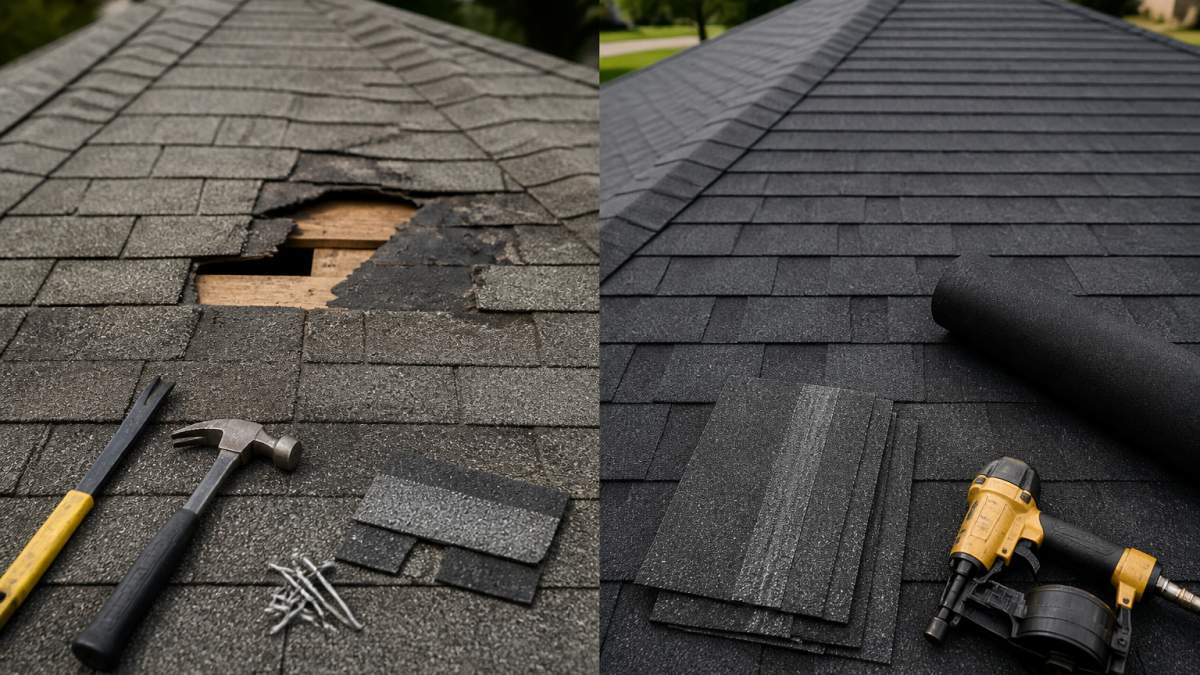
 comparison
Roof Repair vs. Replacement: A 2026 Decision Guide
Table of Contents
- Roof Repair vs. Replacement: Key Differences
- Signs You Need a New Roof
- Roof Repair vs. Replacement Cost Analysis
- Roof Age and Expected Lifespan
- Extent and Location of Damage
- Roof Inspection Checklist for Homeowners
- Hidden Damage and Structural Concerns
- Insurance Coverage and Storm Damage Claims
- Frequently Asked Questions
Last Updated: October 5, 2026
Roof Repair vs. Replacement: Key Differences
Understanding roof repair vs replacement hinges on three factors: the extent of damage, your roof's age, and long-term cost-effectiveness. At Real Property Industries, LLC, we help homeowners navigate this choice by breaking down what separates a targeted fix from a full system replacement.
Roof repair addresses isolated problems: a few missing shingles, localized leaks, or damaged flashing. It's a major investment but extends your home's protection for 20-30 years, depending on materials (Resources).
The core difference isn't just scope, it's about remaining service life. A repair buys time on an aging roof. A replacement resets your timeline entirely. Understanding which path makes sense requires looking at your roof's condition, age, and damage pattern.
Signs You Need a New Roof
Your roof needs replacement when damage is widespread, recurring, or your roof has reached the end of its expected lifespan. Multiple problem areas signal systemic failure, not isolated wear.
Common warning signs include missing shingles across different sections, persistent leaks despite repairs, sagging decking, granule loss (shingles look bald or discolored), and curled or buckled shingles.
Age matters too. Most asphalt shingle roofs last 15-20 years. If your roof is approaching or past that threshold and showing damage, replacement makes more sense than pouring money into repairs that may fail soon anyway.
Roof Repair vs. Replacement Cost Analysis
Cost is often the deciding factor, but the math isn't always straightforward. A cheap repair today can become expensive if it fails repeatedly. The most useful way to compare the two options is to look at cost per remaining year of roof life, not just the sticker price of the next job.
The Cost-Per-Year Framework
Instead of asking "which is cheaper right now," ask "which costs less per year of protection I actually get." The formula is simple:
Cost per year = Total cost ÷ Expected years of service gained
A repair on a roof with remaining life costs less per year of protection than a full replacement, but a replacement also eliminates the recurring repair cycle and the risk of interior damage. Run both numbers before deciding.
When Repair Makes Financial Sense
Repair is the right choice when damage is isolated and your roof still has years of service life remaining. A single leak, a few missing shingles, or minor flashing damage can be fixed for a fraction of replacement cost. If your roof is under 10 years old and shows only localized damage, repair typically makes financial sense.
A practical rule of thumb many roofing professionals use: if the repair costs less than about 25-30% of a full replacement and the roof has at least 5-7 years of remaining life, repair is usually the better move. If the repair creeps above that share, the gap narrows enough that replacement often wins on cost per year.
When Replacement Offers Better Long-Term Value
Replacement becomes the smarter investment when your roof is aging and damage is spreading. If you're facing multiple repairs within a few years, or if your roof is nearing the end of its expected lifespan, the cumulative cost of repairs will eventually exceed replacement cost.
Consider replacement if your roof is 15+ years old, shows signs of widespread damage, or has experienced multiple leaks. A new roof eliminates the uncertainty and gives you a fresh 20-30 year timeline. While the upfront cost is higher, you avoid the frustration of recurring problems and emergency repairs that always seem to happen at the worst time.
A Simple Decision Table
| Scenario | Best Option | Why |
|---|---|---|
| Isolated damage, roof under 10 years old | Repair | Lower cost, roof has years left |
| Repair cost under 25-30% of replacement, 5+ years of life left | Repair | Cost per year favors repair |
| Multiple repairs needed, roof 12-15 years old | Evaluate both | Repair costs may approach replacement cost |
| Repair cost above 30% of replacement | Replacement | Diminishing return on repair |
| Widespread damage, roof 15+ years old | Replacement | Long-term value, peace of mind |
| Recurring leaks in same area | Replacement | Repair will fail again soon |
| Storm damage to one section | Repair | Often covered by insurance |
What Actually Drives the Numbers
Two homes with the same square footage can see very different quotes. Roof pitch, number of layers already on the roof, accessibility, and whether decking needs replacement all move the price. A steep, two-story roof with multiple valleys takes longer and costs more to work on than a simple ranch roof. If a contractor's replacement quote seems high, ask what portion is tear-off, disposal, and decking versus new materials.
Real Property Industries, LLC recommends getting a professional assessment to establish your roof's remaining lifespan before committing to repairs, and asking for the repair and replacement numbers side by side so you can compare cost per year directly.
Roof Age and Expected Lifespan
Your roof's age is one of the strongest predictors in the roof repair vs replacement decision, but age alone is a blunt instrument. Two roofs installed the same year can have very different remaining lives depending on material, climate, ventilation, and how they've been maintained.
Typical Service Life by Material
These are general ranges. Actual lifespan depends on installation quality, ventilation, maintenance, and local weather.
- Asphalt shingles (3-tab): roughly 15-20 years
- Architectural asphalt shingles: roughly 20-30 years
- Metal roofing (standing seam): roughly 40-70 years
- Wood shakes: roughly 20-40 years, with more maintenance
- Clay and concrete tile: roughly 50+ years
- Slate: roughly 75-100+ years
Why Climate Changes the Math
A single age threshold doesn't fit every roof. The same asphalt shingle roof may hit the end of its life years earlier in a hot, high-UV climate than in a milder one. Freeze-thaw cycles stress flashing and sealants. Heavy hail and wind events shorten the interval between replacements.
This matters for the repair-vs-replace decision because a roof that looks "young" by the calendar may already be near the end of its useful life in a harsh climate, and a roof that looks "old" in a mild climate may still have a decade of service left. Ask your inspector to estimate remaining life based on your specific conditions, not just the install date.
How Age Should Change Your Decision
- Under 10 years old, isolated damage: repair is usually the right call. The roof has most of its life ahead of it.
- 10-15 years old, moderate damage: this is the gray zone. Compare repair cost to remaining life and watch for a pattern of repeat problems.
- 15+ years old, widespread damage: replacement is usually the better investment. Repairing a roof that's near the end of its life often just delays the inevitable.
- Past expected lifespan, even if it looks fine: replacement becomes the safer choice. An aging roof is more vulnerable to sudden failure, especially after storms.
Getting a Real Number, Not a Guess
A professional inspection can estimate your roof's remaining service life by looking at granule loss, shingle flexibility, flashing condition, and the state of the underlayment and decking. That estimate is what turns the repair-versus-replacement decision from a guess into a data-driven choice. Real Property Industries, LLC uses this assessment to help homeowners understand what they're actually buying with each option, a short bridge to replacement, or a full reset of the clock.
Extent and Location of Damage
The size and spread of damage matters more than you might think. A single missing shingle is a repair. Missing shingles across multiple roof sections signals a systemic problem.
Damage location also affects the decision. Damage near valleys, chimneys, or vents is harder to repair and more likely to recur. Damage in the middle of a roof plane is easier to address. If damage is concentrated in one area, repair may work. If it's scattered across the roof, replacement is usually more cost-effective.
Water intrusion, leaking into your attic or walls, indicates the damage has moved beyond the shingles into the underlayment or decking. This is a serious warning sign. Surface repairs won't fix underlying structural damage. You need a professional assessment to determine how deep the problem goes.
Roof Inspection Checklist for Homeowners
A thorough inspection helps you understand your roof's true condition before deciding on repair or replacement. You don't need to climb onto your roof, a ground-level inspection catches most issues.
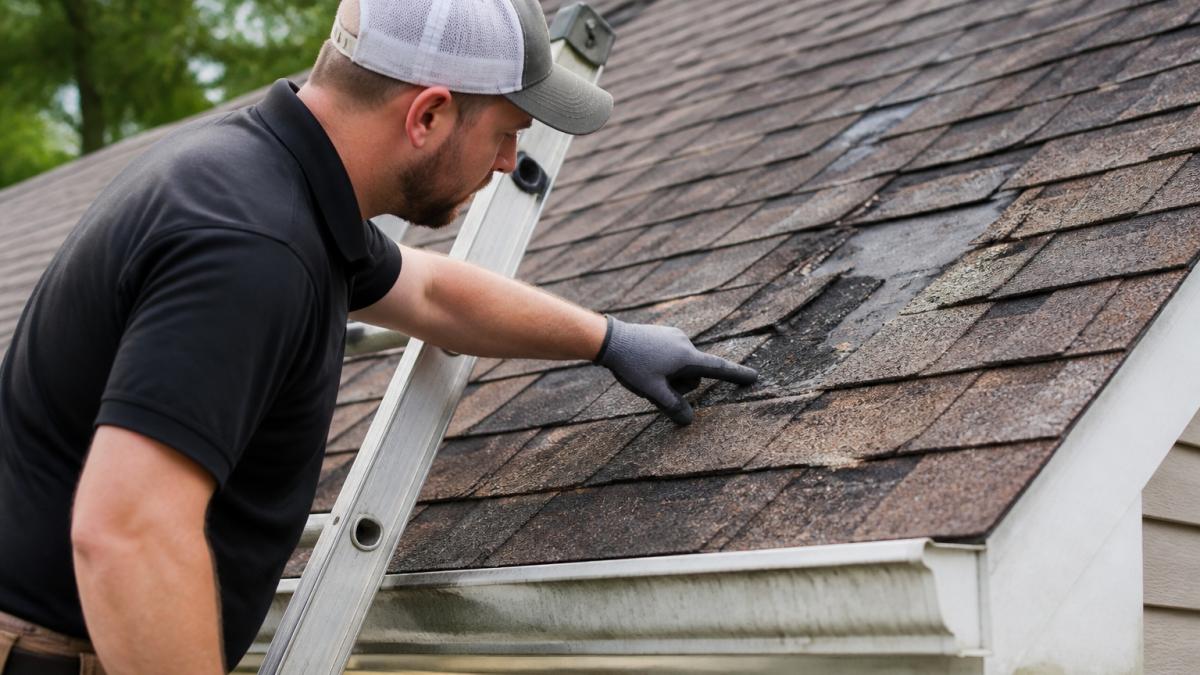
Check for missing, cracked, or curled shingles. Look for bare patches where granules have worn away. Inspect flashing around chimneys, vents, and valleys for gaps or rust. Check the gutters for excessive granule loss (looks like dark sand).
If you find widespread damage, multiple leaks, or structural issues, get a professional inspection before making a decision. Real Property Industries, LLC offers comprehensive roof assessments that identify both visible and hidden problems.
Hidden Damage and Structural Concerns
The damage you see is often just the beginning. Underlayment degradation, roof decking rot, and ventilation problems don't show up in a casual inspection but can make repair pointless.
Water intrusion that reaches the decking causes wood rot. Once rot starts, it spreads. A repair that doesn't address the underlying rot will fail. Ventilation problems cause premature shingle failure and ice dams.
Structural sagging indicates serious decking damage. This isn't a repair situation. The entire roof system needs replacement. A professional inspection uses tools like moisture meters and thermal imaging to detect hidden damage that visual inspection misses.
This is why professional assessment matters. You might think you need a simple repair when the real issue is structural. Conversely, a professional might confirm that surface damage is truly isolated and repair is appropriate.
Insurance Coverage and Storm Damage Claims
Insurance coverage can dramatically shift the repair-versus-replacement equation. Many homeowners don't realize what their policy actually covers until damage happens.
Most homeowners policies cover sudden, accidental damage like storm damage. Hail, wind, and falling trees are typically covered. Gradual wear and tear, aging shingles, normal weathering, is not.
Deductibles matter. If your deductible is higher than the repair cost, you pay the full repair cost yourself.
Age limits apply too. Some insurers won't cover roofs beyond a certain age or require inspection before renewal.
Document damage with photos before cleanup. Get multiple contractor estimates. Work with your insurance adjuster to understand what's covered.
Choosing between roof repair and replacement comes down to honest assessment of your roof's age, damage extent, and remaining service life.
Frequently Asked Questions
What is the 25% rule in roofing?
The 25% rule is a common guideline: if repair costs exceed 25% of the total replacement cost, replacement is typically the better financial choice. This threshold accounts for labor, materials, and the remaining roof lifespan. However, other factors like roof age, damage location, and your long-term plans should also influence the decision. A licensed contractor can help calculate whether your specific repair costs meet this threshold.
How do I know if my roof needs repair or full replacement?
Inspect your roof for isolated damage (a few missing shingles or localized leaks), which typically warrants repair. Signs pointing to replacement include widespread missing shingles, sagging, multiple leaks in different areas, granule loss across large sections, and a roof nearing or exceeding its expected lifespan. A professional roof inspection can identify hidden damage and give you a clear recommendation based on your roof's condition and age.
What is the average lifespan of a residential roof?
Asphalt shingle roofs typically last 15-20 years, while metal roofs can last 40-70 years and slate roofs 50-100+ years. Lifespan depends on climate, installation quality, ventilation, and maintenance. Once your roof reaches 15-20 years old, plan for replacement within the next few years, especially if you notice age-related wear like curling shingles or frequent leaks.
How much does roof repair cost compared to full replacement?
Repair costs vary widely based on damage type and location but generally run lower for patching leaks or replacing sections of shingles. Full replacement costs depend on roof size, material, and labor but generally runs significantly higher. Use the 25% rule: if repairs approach 25% of replacement cost, replacement becomes more cost-effective. Get multiple contractor estimates to compare options for your specific roof condition.