 Listicle
Why Does Your Old House Roof Leak?
Last Updated: November 9, 2026
Quick Summary
Common causes of roof leaks in older homes include brittle asphalt shingles, damaged or missing shingles, failed flashing at joints and valleys, clogged gutters and ice dams, and worn pipe boots and vents. Roof leaks rarely begin with a dramatic hole; they start with granule loss, then hairline cracks, then water finding a path.
- Failed flashing causes more leaks than missing shingles on older homes and is the hardest to see.
- Clogged gutters back water up under the bottom shingle course and rot the roof deck edge.
- The plumbing vent boot is the classic offender because its rubber collar splits after years of sun exposure.
- Trace water uphill from the interior stain, since water runs downhill along rafters.
- Sealing the ceiling stain without fixing the roof traps moisture and hides the real problem.
Table of Contents
- 1. Aging Asphalt Shingles and Brittle Roofing Materials
- 2. Damaged, Missing, and Curling Shingles
- 3. Failed Flashing at Roof Joints and Valleys
- 4. Clogged Gutters, Poor Drainage, and Ice Dams
- 5. Worn Pipe Boots, Vents, and Chimney Penetrations
- How to Find a Roof Leak From the Outside
- How to Fix a Leaking Roof From the Inside
- Why Roof Leaks in Heavy Rain Show Up Fast
- Frequently Asked Questions
1. Aging Asphalt Shingles and Brittle Roofing Materials
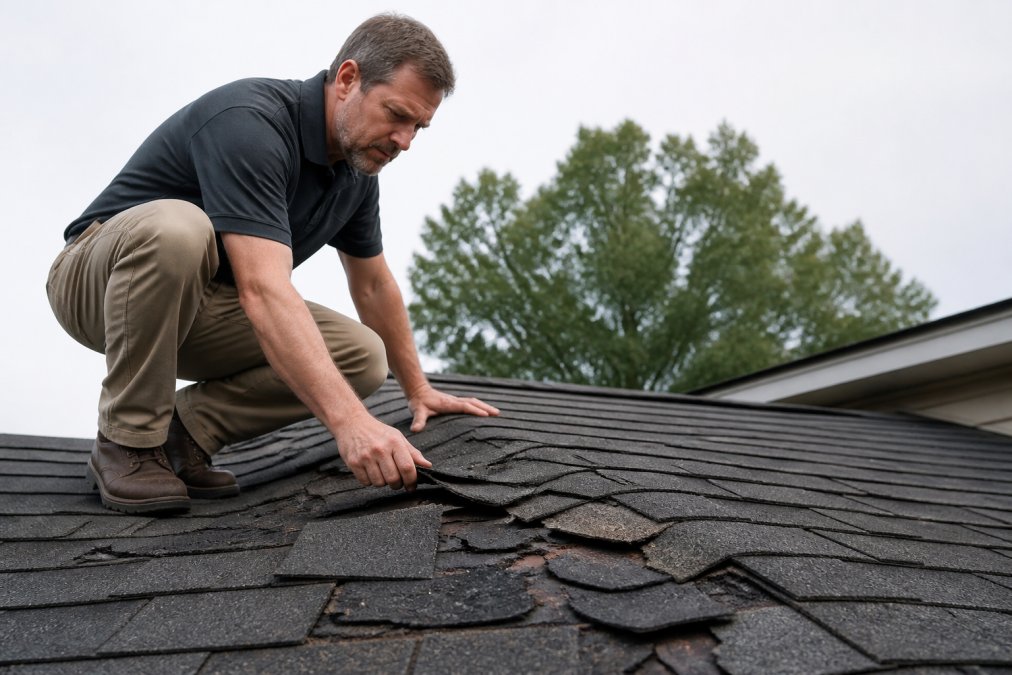
The most common causes of roof leaks in older homes start with the shingles themselves. Asphalt shingles lose their flexibility over time, and once they dry out, they crack instead of bending. This guide focuses on the failures most often seen on older houses, because the fix depends on which layer is failing.
Roof leaks rarely begin with a dramatic hole. They start with granule loss, then hairline cracks, then water finding a path.
Three material problems drive most of it:
- Brittle shingles that snap at the edges and shed granules into gutters
- Exposed fasteners where nail pops lift the shingle above the deck
- Seal failure along the adhesive strips, letting wind-driven rain underneath
Roof age matters more than most homeowners expect. A shingle roof near the end of its lifespan has usually lost the granules that protect the asphalt from sunlight. Once that layer is gone, the mat underneath dries and splits. According to FEMA guidance on roof damage after storms, damaged or aged roofing is one of the first points of water entry inspectors check.
If you suspect the material is past saving, our guide on signs your roof needs professional repair walks through what to look for.
The material problems behind most leaks on older roofs come down to three failures.
| Problem | What happens |
|---|---|
| Brittle shingles | Snap at the edges and shed granules into gutters |
| Exposed fasteners | Nail pops lift the shingle above the deck |
| Seal failure | Adhesive strips let wind-driven rain underneath |
2. Damaged, Missing, and Curling Shingles
Damaged shingles are the easiest leak cause to spot from the ground, and the easiest to underestimate. A single missing shingle exposes the underlayment, and that underlayment was never meant to face weather alone.
Curling is the quieter warning. When shingle edges lift and curl, wind pushes rain sideways under the course above. You get water intrusion on a calm day with no obvious damage.
What to check:
- Curling or clawing at the bottom edges of shingles
- Missing shingles after wind or storm damage
- Cracked shingles with visible splits across the face
- Bald patches where granules have worn away
Watch out: patching one missing shingle on a roof that is already brittle often cracks the two beside it. On an older roof, count the damaged shingles before you climb up. More than a handful usually means the whole field is failing, not one spot.
3. Failed Flashing at Roof Joints and Valleys
Failed flashing causes more leaks than missing shingles on older homes, and it is the hardest to see. Flashing is the metal that seals the joints where the roof meets something else: a wall, a chimney, a valley, or a vent.
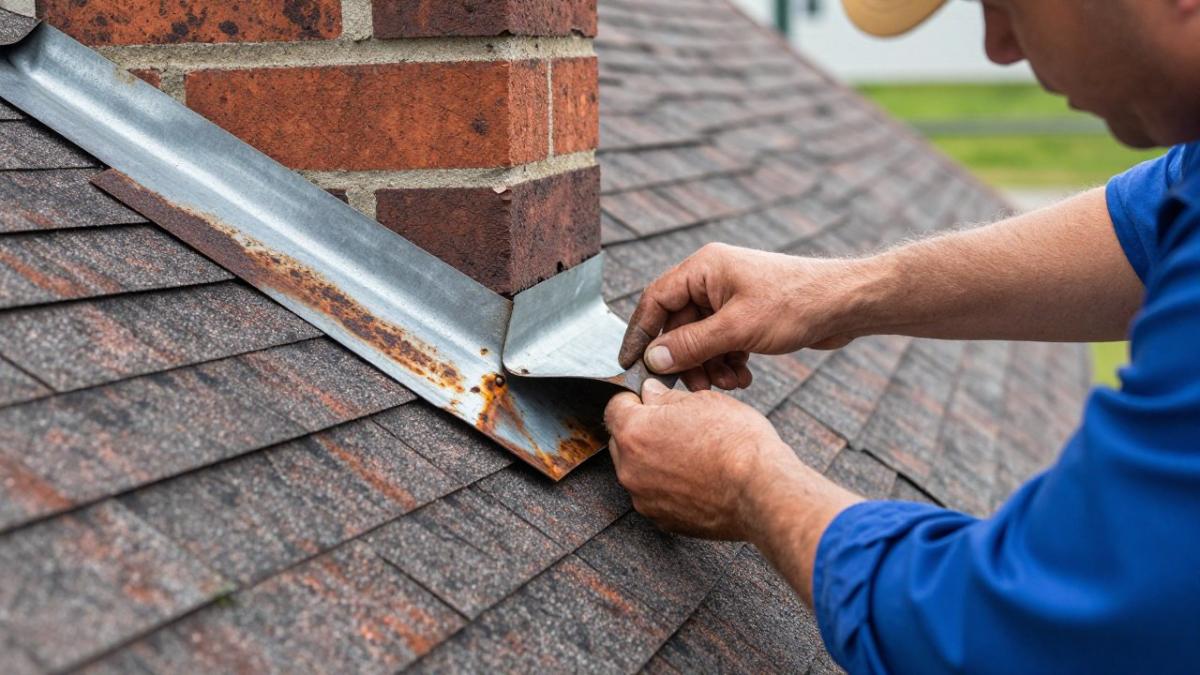
Corroded flashing, step flashing that has pulled away, and cracked sealant all let water behind the shingle course. Roof valleys, where two planes meet, carry the most water on the whole roof. If the valley metal is rusted through or the shingles beside it are worn, leaks show up far from the actual gap.
Older homes carry an extra risk here. Decades of freeze-thaw damage and previous repairs leave flashing bent, resealed, and bent again. Each layer of old sealant hides the failure beneath it.
4. Clogged Gutters, Poor Drainage, and Ice Dams
Clogged gutters do not leak into your ceiling directly. They back water up under the bottom shingle course, soak the fascia, and rot the roof deck edge. That is why so many "roof leaks" in older homes actually start at the gutter line.
Debris buildup blocks water runoff. Standing water sits against the roof edge. In cold weather, that standing water freezes into ice dams, and meltwater backs up under the shingles above the eave.
Signs your drainage is the culprit:
- Water stains at the ceiling edge near an exterior wall
- Sagging or pulling gutter sections
- Ice visible along the eave after a freeze
- Soil erosion or pooling at the foundation below a downspout
Damaged gutters are common on older homes because the hangers loosen and the gutter pitch drifts. Water then pools in the middle of a run instead of draining. If you are weighing repair against replacement, our roof repair vs. replacement decision guide covers how to judge an aging roof.
5. Worn Pipe Boots, Vents, and Chimney Penetrations
Every roof penetration is a potential leak, and older homes have more of them than new builds. Pipe boots, pipe collars around plumbing vents, and roof vents all rely on a rubber or lead seal that cracks with age.
The plumbing vent boot is the classic offender. The rubber collar around the pipe splits after years of sun exposure, and water runs straight down the pipe into the attic. Chimney flashing fails the same way: the sealant at the masonry joint cracks, and water enters the attic moisture cycle.
Skylights add another joint. Skylight seals and the flashing kit around them degrade, and because the opening is large, the leak shows up fast.
Roof leaks at these points often look like plumbing problems from below. Water follows the pipe, so the stain appears far from the vent. A common mistake is sealing the ceiling stain instead of the boot above it.
How to Find a Roof Leak From the Outside
Finding a roof leak from the outside means working from the stain upward and checking every penetration, joint, and valley in the water's path. Start on the roof plane directly above the interior stain, then widen your search.
Work in this order:
- Trace the water path. Water runs downhill along rafters, so the entry point is usually uphill from the stain.
- Check penetrations first. Pipe boots, vents, and chimney flashing fail more often than shingle fields.
- Inspect valleys and joints. Look for rusted valley metal, lifted step flashing, and cracked sealant.
- Look at the eave and gutter line. Water backing up under the first course shows as staining on the fascia.
- Check for nail pops and exposed fasteners where the shingle has lifted.
Safe inspection boundaries matter. Stay off a steep or brittle roof, and never walk a roof in wet conditions. Binoculars from the ground catch most of what a roof walk would. If you want to compare what professional repair involves before you commit, see our residential roofing repair services guide.
How to Fix a Leaking Roof From the Inside
Fixing a leaking roof from the inside starts with containment, not repair. The goal indoors is to limit water damage and mark the leak, then fix the actual entry point on the roof.
Steps that work:
- Move and cover. Shift furniture and put a bucket under the drip.
- Relieve trapped water. If the ceiling bulges, a small pinhole in the center of the bulge lets water out safely.
- Mark the spot. Trace the drip point on the ceiling so you can match it to the roof above.
- Dry the area. Run fans to stop attic moisture and mold from taking hold.
- Document everything. Photograph the stain, the drip, and any damaged belongings for an insurance claim.
Distinguishing a roof leak from plumbing or condensation saves you a wasted repair. A stain that grows in dry weather points to plumbing. Condensation shows as widespread attic moisture with no single drip. A roof leak shows up or worsens during rain.
Watch out: sealing the ceiling stain without fixing the roof traps moisture in the assembly and hides the real problem. Temporary leak mitigation, like a patch or tarp, buys time. It is not a permanent repair.
Why Roof Leaks in Heavy Rain Show Up Fast
Roof leaks in heavy rain show up fast because high-volume water finds every small gap at once. A slow drip in a light rain becomes a steady stream when wind drives water sideways under shingles and flashing.
Wind-driven rain is the real test. It pushes water past seal failure, under lifted shingle edges, and into joints that stay dry in a straight-down rain. That is why homeowners often say "my roof is leaking" only after a storm, even though the damage existed for months.
Heavy rain also overwhelms poor drainage. A gutter that handles a drizzle backs up in a downpour, and water pools at the eave. Storm damage exposes hidden damage: a small crack becomes a torn shingle, and a loose flashing edge lifts free.
If a leak appears during a storm, contain it, document it, and call a professional once the weather clears. When you are ready to talk to someone, here is who to call for a roof leak and what to have ready.
An old roof rarely fails in one place. It fails at the weakest joint, and the next storm finds the next one. Real Property Industries, LLC is a licensed and insured contracting company serving the greater Charleston and Huntington area for more than seven years. For current pricing or a quote, visit the Real Property Industries, LLC website.
Frequently Asked Questions
What are the most common causes of roof leaks in older homes?
The usual suspects are aged asphalt shingles that have turned brittle, missing or curling shingles, and failed flashing at chimneys, valleys, and sidewalls. Clogged gutters and worn pipe boots around plumbing vents also cause a large share of roof leaks. In older homes, layers of previous repairs and outdated materials add to the problem, so a full inspection is often the fastest way to pin down the source.
Why does my roof leak sometimes and not others?
Intermittent leaks usually point to a problem that only lets water in under certain conditions. Wind-driven rain can push water past flashing that stays dry in a light shower, and ice dams only form after snow and a freeze-thaw cycle. A small gap may also take on water only when the roof is saturated. Track when the leak appears and note the weather, because that pattern helps a contractor trace the entry point.
Can an old roof leak during heavy rain but stay dry in light rain?
Yes. Heavy rain sends a larger volume of water across the roof, so small openings in flashing, valleys, or pipe boots that handle light rain can overflow. Wind-driven rain during storms also forces water sideways into joints that normally shed it. If your roof leaks in heavy rain but stays dry otherwise, have the flashing and drainage checked before the next storm season.
Who do I call if my roof is leaking?
Call a licensed and insured roofing contractor first. They can inspect the roof, trace the leak, and handle repairs or replacement. If water is actively pouring in, a roofer can also apply a temporary seal. For interior water damage, contact a water remediation company after the roof is stabilized, and check with your insurance agent about coverage. Avoid climbing the roof yourself, especially in wet conditions.
Will homeowners insurance pay for a leaky roof?
It depends on the cause. Most policies cover sudden damage from storms, hail, or fallen limbs, but they typically exclude leaks caused by age, wear and tear, or poor maintenance. Document the damage with photos and keep receipts for any emergency repairs. Your agent can confirm what your policy covers, and a licensed contractor's written report helps support the claim.