
 blog
blog
Professional Deck Construction Services: What You Need to Know
Table of Contents
- What Professional Deck Construction Services Include
- Composite vs Wood Decking Pros and Cons
- How to Choose a Deck Contractor
- Deck Building Permit Requirements and Code Compliance
- Average Cost of Deck Installation and Budget Planning
- Maintenance and Long-Term Care for Your New Deck
- Why Professional Installation Matters for Structural Integrity
- Frequently Asked Questions
Last Updated: September 23, 2026
What Professional Deck Construction Services Include
Professional deck construction services go far beyond simply nailing boards together. When you hire a contractor for deck construction services, you're investing in expertise that covers design, materials selection, structural engineering, permitting, and installation. Real Property Industries, LLC specializes in comprehensive deck construction.
A complete deck construction project typically includes site assessment and custom design planning. The contractor evaluates your yard's slope, soil conditions, and drainage patterns. They'll discuss how you want to use the space, entertaining, dining, or quiet relaxation, and design accordingly. This planning phase prevents costly mistakes later.
Foundation and structural work forms the backbone of any quality deck. Proper substructure includes concrete footings below the frost line, pressure-treated posts, ledger board installation (when connecting to your home), and joist systems with correct spacing. These elements determine whether your deck will last 10 years or 25 years.
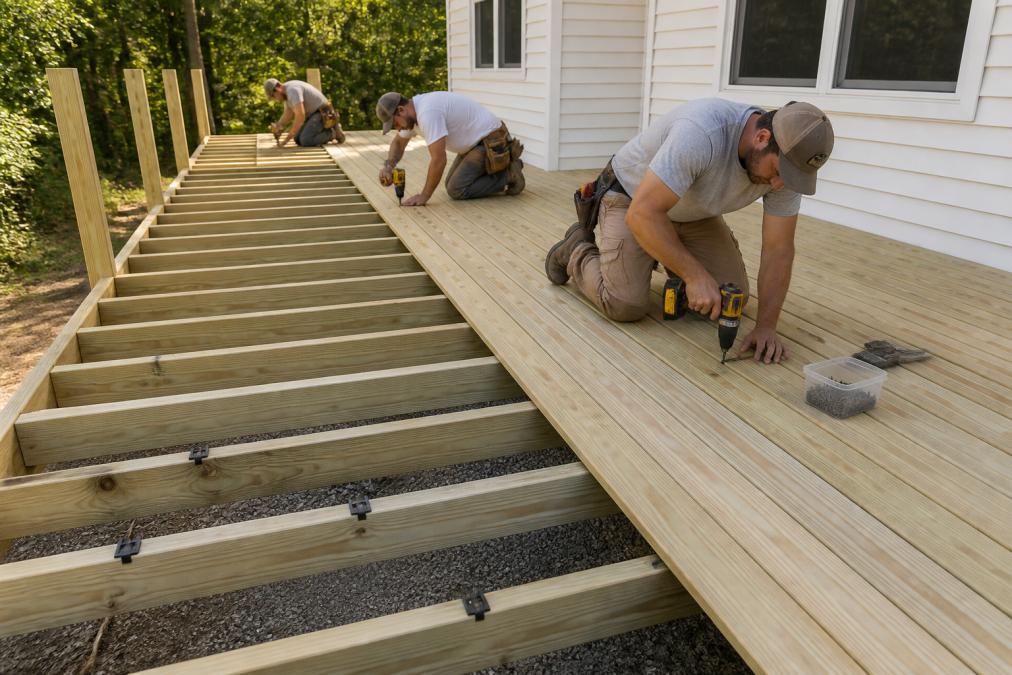
Installation includes fastener systems, railing systems, and finishing touches. Modern decks use composite materials or sealed wood, both requiring specific installation techniques. Your contractor will also handle any permits, inspections, and code compliance documentation, critical steps most DIY builders skip.
Composite vs Wood Decking Pros and Cons
The material choice shapes your entire deck experience and long-term maintenance burden. Both composite decking and pressure-treated lumber have legitimate advantages, but performance varies dramatically based on your regional climate.
Pressure-treated lumber costs 30-50% less upfront and offers authentic wood aesthetics that many homeowners prefer. It accepts stain and sealant, allowing customization in color and finish. However, it demands regular maintenance, staining and sealing every 2-3 years prevents rot and weathering. Wood can splinter, requires occasional sanding, and has a typical lifespan of 15-20 years before structural replacement becomes necessary. In humid regions with high moisture and freeze-thaw cycles, wood decks often fail closer to 10-12 years without meticulous care.
Composite decking combines wood fibers and plastic polymers into a durable material requiring minimal maintenance. No staining or sealing needed. It resists splinters, fading, and mold growth. The trade-off is 40-60% higher initial cost and limited color customization compared to stained wood. Composite typically lasts 25-30 years. Modern composites have improved significantly in appearance, though some homeowners still perceive them as less authentic.
| Material | Initial Cost | Maintenance | Lifespan | Best Climate Fit |
|---|---|---|---|---|
| Pressure-treated wood | Lower | Stain/seal every 2-3 years | 15-20 years (10-12 in humid climates) | Dry, temperate regions with low moisture exposure |
| Composite | Higher | Occasional cleaning only | 25-30 years | Humid regions, coastal areas, freeze-thaw zones |
Climate-specific material longevity: If you live in a region with high humidity (Southeast, Pacific Northwest) or frequent freeze-thaw cycles (Northeast, Upper Midwest), composite decking delivers better long-term value despite higher upfront cost. The material resists moisture damage and ice expansion that degrades wood. In arid climates with low humidity and minimal temperature swings, pressure-treated wood performs reliably and the maintenance burden is lighter. Coastal areas with salt spray accelerate wood decay; composite is the safer choice.
Consider your local frost line depth as well. Deeper frost lines (common in northern regions) require deeper footings, increasing labor costs regardless of decking material. Your contractor should assess both your climate and soil conditions when recommending materials.
How to Choose a Deck Contractor
Selecting the right contractor determines whether your deck project becomes a success story or a cautionary tale. Start by verifying licensing and insurance, this isn't optional. A licensed contractor in your state has passed competency exams. Insurance protects you if someone gets injured on your property during construction.
Ask for references and follow up. Contact at least three previous clients and ask specific questions: Did the contractor show up on schedule? Were there unexpected costs? How does the finished product look years later? References reveal patterns you won't catch from a website.
Review the contractor's experience with deck construction services specifically. General contractors sometimes take deck jobs without deep expertise in structural requirements or material selection. Specialists understand nuances like ledger board flashing (critical for preventing water damage) and proper joist spacing for your region's snow load.
Get detailed written estimates from at least three contractors. The estimate should itemize materials, labor, permits, and timeline. Vague estimates hide surprises. The lowest bid isn't always the best, it often means corners will be cut.
Deck Building Permit Requirements and Code Compliance
Building permits exist to protect you. They ensure your deck meets safety standards and won't collapse or create liability issues. Most jurisdictions require permits for decks over 200 square feet or any deck attached to your home.
Permit requirements vary by location, but common elements include frost line depth (how deep footings must go), joist spacing standards, railing height and strength specifications, and ledger board attachment methods. These codes reflect lessons learned from failed decks. A deck built to code will support snow loads, resist rot, and keep railings secure.
The permit process involves submitting plans, paying fees, and scheduling inspections at key stages, foundation, framing, and final completion. Your contractor should handle this paperwork, ensuring compliance and protecting your investment. Building without permits creates problems when selling your home, filing insurance claims, or facing liability if someone gets injured.
Many homeowners skip permits to save money and time. This decision often costs more later through fines, required demolition, or inability to sell the property. Professional deck construction services always include proper permitting.
Average Cost of Deck Installation and Budget Planning
Deck construction costs depend on size, materials, complexity, and local labor rates. Understanding both the investment and the return helps you make a decision aligned with your budget and long-term home value.
Cost drivers and typical ranges: A basic ground-level pressure-treated wood deck (12×16 feet) typically costs $3,000-$5,000 installed. A composite deck of the same size runs $6,000-$9,000. Multi-level decks, elevated structures, or decks with built-in features like pergolas, outdoor kitchens, or integrated lighting systems can exceed $15,000-$25,000 depending on complexity. Labor typically represents 50-60% of the total cost; materials make up the remainder. Local labor rates vary significantly by region, urban areas and regions with high cost of living see higher contractor rates.
Factors that increase cost include:
- Elevated or multi-level design (requires more structural engineering and materials)
- Composite or premium wood materials (higher material cost)
- Attached ledger board (requires flashing and more complex installation)
- Integrated features (pergolas, built-in seating, lighting, hot tub platforms)
- Difficult terrain or poor soil conditions (may require additional site prep or deeper footings)
- Local permit and inspection fees (varies by jurisdiction, typically $200-$800)
ROI and property value impact: A deck addition typically recovers 50-80% of its cost at resale, according to homeowner surveys. A $10,000 composite deck may add $5,000-$8,000 to your home's resale value. This ROI varies by region and market conditions, decks add more value in warm climates where outdoor living is year-round, and in markets where outdoor space is limited. A well-maintained composite deck often appeals to buyers more than an aging wood deck requiring immediate maintenance.
Beyond resale value, a quality deck increases your enjoyment of your property immediately. Many homeowners find the lifestyle benefit justifies the investment independent of ROI calculations.
Budget planning approach: Request detailed estimates from at least three contractors.
Maintenance and Long-Term Care for Your New Deck
Your maintenance schedule depends on which material you chose. Pressure-treated wood requires regular attention to stay in good condition. Stain or seal the deck every 2-3 years, depending on weather exposure. This prevents water penetration that leads to rot and structural failure.
Why Professional Installation Matters for Structural Integrity
The difference between a deck that lasts 10 years and one that lasts 25 years often comes down to installation quality. Structural integrity depends on details most homeowners don't know to check.
Frequently Asked Questions
How much does professional deck construction cost on average?
Deck installation costs depend on size, materials, complexity, and local labor rates. Wood decks typically cost less upfront than composite, but composite requires less maintenance over time. Pricing also varies based on foundation work, railing systems, and whether permits and inspections are included. Contact Real Property Industries, LLC for a free estimate tailored to your project.
What permits are required for deck construction?
Most jurisdictions require building permits for deck construction to ensure code compliance and structural safety. Permit requirements vary by location but typically cover foundation support, joist spacing, ledger board installation, and railing height. Your contractor should handle permit applications and coordinate inspections. Check with your local building department for specific requirements in your area.
How do I verify if a deck contractor is licensed and insured?
Ask your contractor for proof of current licensing and insurance certificates before work begins. Verify their license through your state's licensing board or contractor registry. Request references from past projects and ask about warranty coverage on workmanship. Licensed and insured contractors protect you from liability and ensure work meets building codes.
What's the difference between composite and wood decking?
Wood decking, typically pressure-treated lumber, costs less initially but requires regular staining, sealing, and maintenance to prevent rot and weathering. Composite decking combines wood fibers and plastic, offering superior durability and lower maintenance but higher upfront costs. Composite resists fading, staining, and mold better than wood. Your choice depends on budget, maintenance willingness, and climate conditions affecting material longevity.
When you're ready to transform your outdoor living space with professional deck construction services, the right contractor makes all the difference. Real Property Industries, LLC combines licensed expertise, honest pricing, and a commitment to building lasting relationships with homeowners. Get started with a consultation and free estimate to see how we can enhance your home's exterior and create the outdoor space you've been imagining.